From the research journal
Best Creature Horror Books: Underground Monsters and Cave Thrillers
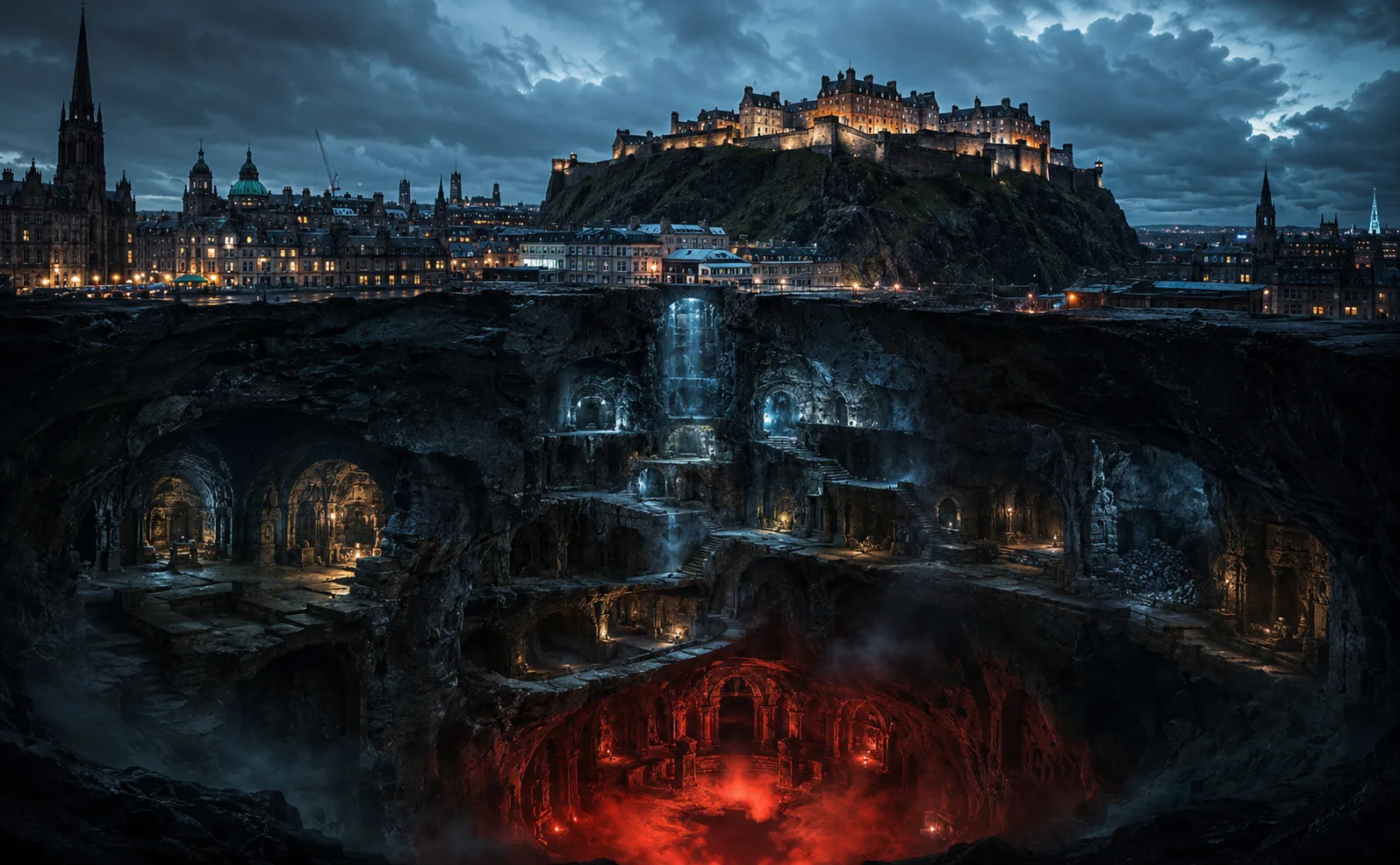
There’s something primal about the fear of what lurks beneath our feet. Underground horror plays on the fears we can’t argue ourselves out of: tight spaces, total darkness, and the suspicion that we’re not alone down there. Caves, catacombs, abandoned mines, deep-sea trenches. Put a creature in any of them and you have some of the most intense reading the genre offers.
I write in this space myself, and I’ve read a lot of it. So if you’re looking for books about monsters in caves, underground horror that will keep you up at night, or creature features that mix scientific exploration with plain terror, this is my list. Some are classics that defined the subgenre, some are recent releases. Some are pure cave horror; others use comparable forms of confinement: submerged stations, isolated islands, forests, museums, Arctic ice, even the human body. Not every title is literally underground, but all of them put their characters in a predator’s territory with nowhere easy to run.
What Makes Underground Creature Horror So Terrifying?
Why does it work so well? Partly it’s the confinement. Underground there are no escape routes, so characters can’t simply run; they have to go through the creature’s territory to get out. Then there’s the dark. Take away sight and every scrape, drip and breath in the blackness gets louder. There’s an inversion at work too: we build our homes above ground and assume safety comes from height and light, and these books suggest that beneath our foundations lies something older and stronger than us. And finally, isolation. Miles of rock or a maze of tunnels cut characters off from rescue, so survival comes down to whatever they’ve brought with them.
These are the books that use those fears best.
The Essential Underground Creature Horror Novels
1. The Descent by Jeff Long
Start here. When a team of elite cavers discovers a vast subterranean network spanning the entire planet, they find evidence of an ancient humanoid species that has evolved in the dark for millennia. Scientific exploration turns into a desperate fight for survival against creatures perfectly adapted to hunt in absolute blackness.
What I admire about Long’s book is its scope. He doesn’t limit the horror to a single cave system but imagines an entire underground world with its own ecology, civilisations and horrors. The creatures, called hadals, aren’t mindless monsters. They’re intelligent predators with their own culture and motives, and the book has serious things to say about evolution, faith, and what humanity might become when stripped of light and civilisation.
Perfect for: readers who want epic scope with their horror, anyone interested in evolutionary biology, and those who like detailed world-building in a creature feature.
2. The Ruins by Scott Smith
Sometimes the horror is something completely unexpected. A group of young tourists searches for a missing traveller at a remote archaeological site near a Maya village in Mexico, and ends up trapped on a vine-covered hill above an abandoned mine shaft. An aggressive plant species has claimed the site, and it has developed a horrifying appetite and an unsettling intelligence.
It’s not a cave book, but it belongs here for its use of confined space. The terrain around the hill works like underground walls: there is no way off it. The isolation, the desperate attempts at survival and the slow realisation of what they’re really facing make for almost unbearable tension, and Smith is very good on how ordinary people fall apart under extreme pressure. If you like your creature horror psychological, with impossible choices and character dynamics under strain, this is the one.
3. The Deep by Nick Cutter
Cutter takes cosmic horror to the ocean floor. A mysterious illness called the ‘Gets is erasing humanity’s memories, and the cure may lie in a substance found at the bottom of the Mariana Trench. A veterinarian descends eight miles to the underwater research station where his brother made the discovery, and where something ancient and malevolent waits in the crushing dark.
It’s Lovecraft crossed with body horror and deep-sea creature elements, and Cutter doesn’t hold back on the disturbing imagery. The psychological toll of isolation at that depth does a lot of the work too. An underwater station functions much like a cave system: nowhere to run, and the environment itself will kill you.
Perfect for: fans of cosmic horror and body horror, and anyone who finds the deep sea as frightening as a cave.
4. The Troop by Nick Cutter
Before The Deep, Cutter wrote this nightmare about a Boy Scout troop’s weekend camping trip. A stranger arrives on their remote island carrying a bioengineered parasite that turns its hosts into ravenous shells. A small island works like an underground setting, since escape is impossible and the thing keeps spreading.
Cutter’s real strength is the breakdown of civilisation in miniature. As the boys succumb one by one, social bonds collapse fast, and the parasite is one of the most disturbing creatures in modern horror precisely because it isn’t supernatural. It’s plausible. It’s not an easy read, and that’s the point. Pick it up if you liked Lord of the Flies, or if scientific and parasitic horror is your thing.
5. Catacomb by J.F. Penn
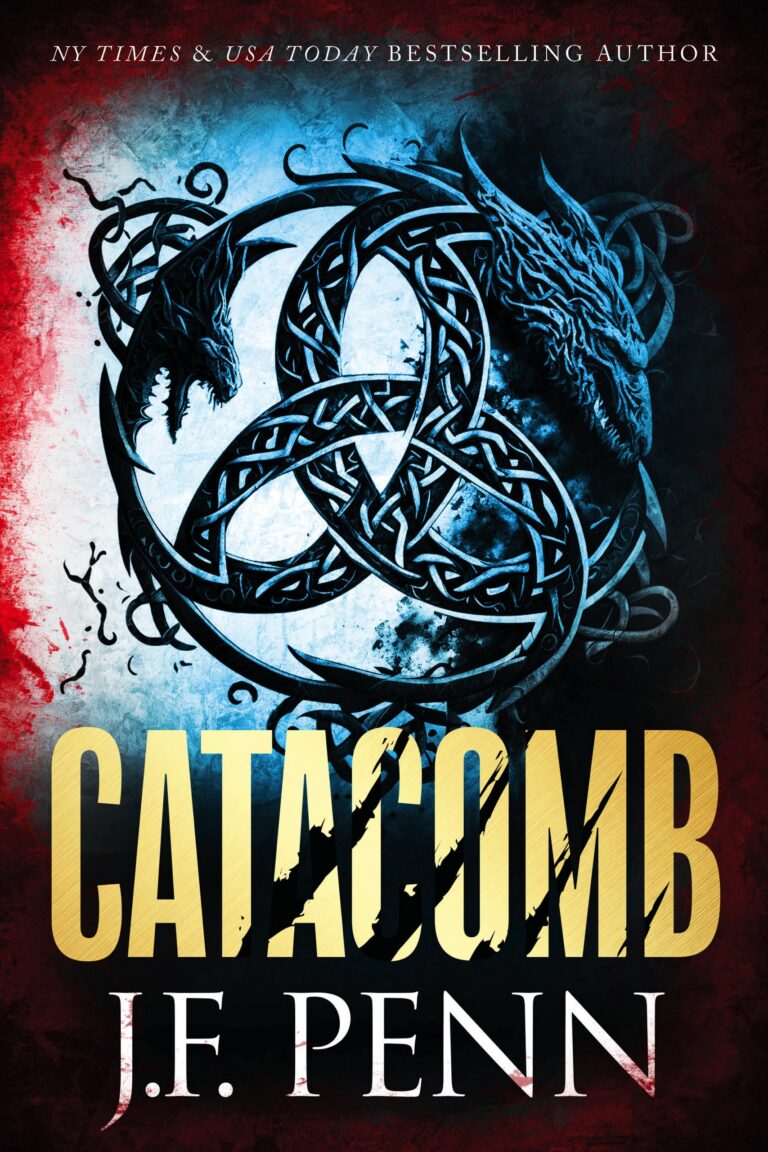
This one is mine. When ex-military search and rescue specialist Walker Kane travels to Edinburgh to reconnect with his daughter Emily, he’s hoping for redemption and a fresh start. Instead, he discovers a network of volcanic catacombs beneath the city’s cobbled streets, and something ancient and hungry living in those depths. Emily has been chosen as the annual sacrifice to the Grendsluagh, a creature that has claimed victims for over a thousand years, fed by a secret society known as the Cabal.
I wanted to combine several kinds of horror: the claustrophobia of underground exploration, the ticking clock of a rescue mission, and the primal fear of a creature of my own invention, inspired by the Sluagh of Gaelic folklore and by Grendel from Beowulf. Walker must descend into the maze of catacombs with the help of a librarian who discovered the Cabal’s secrets and an urban explorer who knows the forbidden tunnels. The catacombs themselves are fictional, but Edinburgh’s real underground vaults, hidden chambers and volcanic landscape inspired them, which gives the supernatural setting a foundation in the city’s genuine history and geology and, I hope, makes the horror more immediate.
At its core it’s about a father desperate to save his daughter and make up for years of absence. The creature horror serves the characters, and Walker’s military training becomes crucial in the confined, treacherous underground.
Perfect for: fans of The Descent who want the same underground atmosphere at a faster pace, readers who like ex-military protagonists using tactical skills against impossible odds, and anyone who enjoys creature horror rooted in real mythology and real locations.
Find out more about Catacomb or explore the Catacomb world, with the real Edinburgh underground and the myths behind the monster.
6. The Luminous Dead by Caitlin Starling
A caver explores an alien planet’s underground network. Desperate for money, she has lied about her experience to secure a lucrative contract, and the caves hold more than geological wonders. Something is down there with her, and her only link to the surface is a handler who may not be telling her the whole truth.
Starling builds the horror from isolation and paranoia as much as from the creature. Is the protagonist hallucinating because of her equipment, or is something really stalking her? The cave system becomes a character in itself, and the creature reveals are handled with a restraint that makes them land harder. This is the one I press on people who like science fiction horror, single-character narratives and slow-burn dread.
7. Subterranean by James Rollins
Rollins brings his usual mix of action, science and mythology to underground horror. A team ventures into a vast cave system beneath Antarctica and discovers an entire ecosystem that evolved in isolation, including humanoid creatures adapted to life without light. Exploration becomes a battle for survival as the team realises it has invaded the territory of a savage predator species (the intelligent humanoid inhabitants turn out to be a separate, largely peaceful people).
Rollins knows how to pace a book. The novel moves fast between scientific wonder and action set pieces, and the creatures feel alien yet plausibly evolved from familiar biology. It’s lighter on pure horror than some entries here, but the creature encounters are thrilling and the problem-solving under pressure is clever. If you want action-adventure with your horror, or you know Rollins from Sigma Force and want his early work, or you like a scientific explanation for your monsters, this is a good place to start.
8. Beneath by Jeremy Robinson
A Global Exploratory Corporation crew led by oceanographer Kathy Connelly melts through miles of ice on Jupiter’s moon Europa to reach the hidden ocean beneath, and finds an intelligence that does not want to be found. The creatures in the depths are nightmarish, and Robinson doesn’t skimp on the action sequences.
His strength is the military thriller mixed with creature horror; he writes fast-paced action and it transfers well to underground survival. The alien-moon setting adds another kind of danger, since even if the crew escapes the creatures, the environment will kill them. Underneath it all is the question of what happens if the first life we find beyond Earth is hostile.
Perfect for: readers who like military-style creature features, fans of Alien, and anyone drawn to ice-world settings and their dangers.
9. The Strain by Guillermo del Toro and Chuck Hogan
The Strain opens above ground with a plane landing at JFK, but much of its horror unfolds in New York City’s underground: subway tunnels, sewers and forgotten spaces. Del Toro and Hogan reimagine vampires as parasitic creatures spread by biological infection, the subways become their hunting ground, and the Master, the ancient vampire commanding the outbreak, makes the underground his domain.
What I like is how familiar urban spaces turn hostile. Anyone who’s ridden the subway at night will find new reasons to fear those tunnels. The creatures are properly disturbing, folklore crossed with biological horror, and although this is the first book in a trilogy it works well on its own as an introduction to del Toro’s vision. Urban horror fans, and anyone who wants vampires that are actually frightening again, should pick it up.
10. Creature-free wildcard: The Hole by Hye-young Pyun
Translated from Korean, this psychological horror novel follows Oghi, who wakes from a coma after a car crash that killed his wife. He is paralysed and unable to speak, dependent on his mother-in-law, who moves in and begins digging ever-larger holes in the garden. There is no literal creature. The horror is psychological and confinement-based, and you’re never quite sure what’s real and what’s trauma-induced perception.
It works as a psychological thriller, as confinement horror, and as a book about guilt and loss. The hole is a metaphor for grief and also a real, physical threat. Korean horror often comes at familiar tropes from unexpected angles, and Pyun does something original here. If you like literary horror, international perspectives, and ambiguous narratives that trust you to keep up, read it.
More Underground Creature Horror to Explore
11. Ancient Enemy by Michael McBride
On an isolated corner of a reservation in southern Colorado, once Ancestral Puebloan land, teenager Sani Natonaba wakes to find his family’s sheep slaughtered by something that hunts with impossible stealth. Only his stroke-silenced grandfather knows what it is, and Sani must decode clues the Anasazi hid a thousand years ago before it finishes hunting his bloodline. A DarkFuse novella first published in 2014 that combines archaeological mystery with creature action, and a good choice if you want a short, intense creature encounter rooted in a fictionalised treatment of Ancestral Puebloan history (the novel uses the older term “Anasazi”).
12. The Descent: The Official Movie Novelization by Christian Francis
Don’t confuse Jeff Long’s The Descent with the 2005 film of the same name (directed by Neil Marshall). The film follows a group of women exploring an unmapped cave system and encountering pale, blind humanoid creatures. Both are underground creature horror, but they’re completely separate stories. The film finally got an official novelisation in 2025 (Christian Francis, Titan Books, October 2025), which is the book on this list. For a related screen recommendation, the unrelated 2005 film The Cave also follows scientists and cave divers meeting creatures in a Romanian cave system.
13. Devolution by Max Brooks
Brooks applies his documentary-style storytelling to Bigfoot. When residents of an eco-friendly community in the shadow of Mount Rainier are cut off from civilisation by a volcanic eruption, they discover they’re not alone in the woods. The sasquatch troop, displaced by the same eruption, aren’t gentle giants but pack-hunting apex predators. If you enjoyed the format of World War Z, or you have a soft spot for cryptids and volcanic wilderness settings, this is for you.
14. Relic by Douglas Preston and Lincoln Child
Much of this thriller takes place in the fictional New York Museum of Natural History, closely inspired by Manhattan’s American Museum of Natural History, but the creature’s lair in the basement and the climactic sequences in the tunnels beneath deliver real creature horror. The Mbwun is one of the more memorable monsters in thriller fiction, part human, part reptile, all nightmare, and Preston and Child balance the scientific investigation with the physical horror. Museum thriller fans, and readers who like smart protagonists and forensic detail, will be happy.
15. The Abyss by Orson Scott Card
Card’s novelisation of the James Cameron film expands the story of an underwater oil drilling team that encounters something alien in a deep ocean trench. The aliens aren’t traditional “creatures”, but the confined underwater station and the pressure of the depths give it the same claustrophobia as cave horror. Read it for the deep-sea setting, the first-contact angle, and Card’s character work.
16. Subhuman by Michael McBride
A research team in Antarctica discovers preserved humanoid remains that are neither modern human nor Neanderthal, and wakes something that should have stayed frozen. McBride writes brutal creature horror, and this one, in the Antarctic underground, mixes archaeological mystery with survival horror. Not for the squeamish. If you want uncompromising gore, an Antarctic setting and a frozen-in-time premise, it delivers.
17. The Terror by Dan Simmons
Mostly this is about the ill-fated Franklin Expedition trapped in Arctic ice, but Simmons introduces the Tuunbaq, a massive creature that hunts the crews across the frozen wasteland and drags victims off over the ice. It’s historical fiction with a creature at its centre. Simmons draws on, and heavily fictionalises, Inuit beliefs: the Tuunbaq was invented for the novel. The ice creates comparable isolation and entrapment to any cave. It’s long, and the research is thorough. If you like epic-length horror with a real historical spine, few books do it better.
18. The Ritual by Adam Nevill
Four friends take a shortcut through the Swedish wilderness and encounter an ancient presence in the forest. It isn’t underground in the usual sense; the confined horrors here are an ancient rune-carved house, a desecrated church, and the attic where the creature’s ‘ancient ones’ are kept. Nevill is very good at dread, and at making nature itself feel hostile. Folk horror readers, and anyone who likes a slow burn with a creature rooted in mythology, will find plenty here.
Quick-Hit Underground Creature Recommendations
19. Infected by Scott Sigler
Body horror meets creature invasion in a body-count parasite story. Aggressive and disturbing.
20. Excavation by James Rollins
Archaeological horror in Incan caves, with biological nightmares thrown in.
21. The Faceless One by Mark Onspaugh
An archaeologist frees a mask from Alaskan ice and unleashes T’Nathluk, a faceless god of Tlingit legend; a retired shaman must stop it. Quick and scary.
22. 14 by Peter Clines
Mostly about an apartment building, but the underground elements and the creature reveals pay off.
23. The Anomaly by Michael Rutger
A Grand Canyon cave expedition finds something impossible. Adventure horror with creature elements.
How to Choose Your Next Underground Creature Horror Book
Too many options? For maximum terror, start with Jeff Long’s The Descent or Nick Cutter’s The Deep, the most intense books on this list. If you want pace, go for James Rollins’ Subterranean, Jeremy Robinson’s Beneath, or my Catacomb, all of which run on thriller pacing. For psychological depth, Caitlin Starling’s The Luminous Dead and Hye-young Pyun’s The Hole are as interested in the mental toll as the physical danger.
If you like real places you could visit, Catacomb (Edinburgh) and The Strain (New York City) have that, and Relic’s fictional museum was inspired by New York’s American Museum of Natural History. For science-driven or speculative biological horror, try Scott Smith’s The Ruins, Nick Cutter’s The Troop, or anything by Michael McBride. For mythology and folklore, try Catacomb, with its invented monster inspired by Gaelic folklore and Beowulf; The Ritual, with its Old Norse cult framework; and Dan Simmons’ The Terror, which combines invented supernatural material with elements drawn from Inuit beliefs. Antarctic settings: Subterranean or Subhuman. And if it’s cave-diving detail you’re after, The Luminous Dead has the technical specifics that make the claustrophobia real.
What Makes These Books Perfect for Readers?
Why does the subgenre still land? Partly because it maps onto present-day worries. Several recent entries ask what might lie beneath melting ice or shifting tectonic plates, and as climate change uncovers previously frozen ground, that question gets less hypothetical. Post-pandemic, stories about being cut off from help and shut in with something dangerous read differently too. We keep finding new species in deep-sea vents and isolated caves, which makes creature horror grounded in plausible biology feel less far-fetched. And urban exploration is a real subculture with real dangers, so books about people venturing into forbidden spaces have an audience that recognises itself.
Final Recommendations
If you’re new to all this, start with The Descent by Jeff Long. It’s one of the defining modern novels of the subgenre. Follow it with Catacomb by J.F. Penn for a tighter, action-focused story with the emotional stakes turned up (yes, it’s mine, but I stand by the pairing), then read The Ruins by Scott Smith for psychological survival horror at its best.
If you already know those, try The Hole by Hye-young Pyun or Michael McBride’s novella Ancient Enemy, and don’t skip the action-thriller hybrids from Jeremy Robinson and James Rollins. They deliver creature encounters at military-thriller pace.
What all these books share is a reminder that for all our technology, we’ve barely scratched the surface of what lies beneath our feet. Something ancient may still hunt down there in the dark, and we’re only just rediscovering that we were never alone. The best creature horror makes us question our place in the natural order. Walk into another predator’s territory and we’re prey again, and there’s no territory more frightening than the endless dark underground.
Looking for more horror recommendations? Check out my guides to Scottish horror fiction, books featuring ex-military protagonists in horror scenarios, and the best creature features in contemporary horror.
What’s your favourite underground creature horror book? Did I miss one? These recommendations span decades, from established classics to recent releases, so there should be something here for newcomers and hardened creature-feature devotees alike.
Stay scared, and remember: when you go underground, you’re in something else’s home. It knows those tunnels far better than you ever will.